8 Wedding Welcome Party Ideas for a Seamless Wedding Weekend

If you’re in the middle of wedding weekend planning, your welcome party is one of the best places to be intentional. It’s often treated as an extra event, but it can actually play a key role in how the entire weekend flows.
When approached thoughtfully, it can help streamline logistics, reduce costs, and create a more cohesive guest experience from the very start.
Here’s how one couple approached their welcome party and the decisions that made a real impact:
1. Make Your Rentals Work Double Duty
One of the simplest ways to be strategic is to think beyond a single event.
We used the same chairs, cocktail tables, and key rentals across multiple moments of the weekend. Not only did this reduce delivery and labor costs, but it also created a sense of continuity from the welcome party into the wedding day.

2. Invest in Pieces You’ll Actually Keep
We struggled to source a table through local rental companies to use as the welcome table for the entryway. We ended up finding the perfect console table on Amazon. It was the exact shade of blue and matched the venue perfectly. It also had drawers, which meant we could store decor and other items there throughout the weekend.
One of my biggest pieces of wedding advice when it comes to decor is this: if you wouldn’t put it in your house, it shouldn’t be at your wedding. This couple took that to heart, and the console table now lives in their living room.

3. Rethink the Traditional Welcome Bag
Rather than assembling individual welcome bags, we styled a welcome table with items guests could grab as they pleased.
It felt more relaxed, reduced waste, and allowed guests to take only what they actually wanted, while still creating that welcome moment when they arrived.
4. Opt for Non Floral and DIY Centerpieces
Our florist was booked for another event on Friday, which gave us the opportunity to approach centerpieces in a different way.
I started looking into non floral inspiration and came across lemons in vases. That led to the idea of bowls of limes. It was simple, cost effective, and tied directly into the food and bar. Tacos, palomas, margaritas, and limes....It grounded the design in the experience rather than just the visuals.


5. Skip the Traditional Bar Setup
Instead of renting a full bar, we used a banquet table on risers and styled it intentionally.
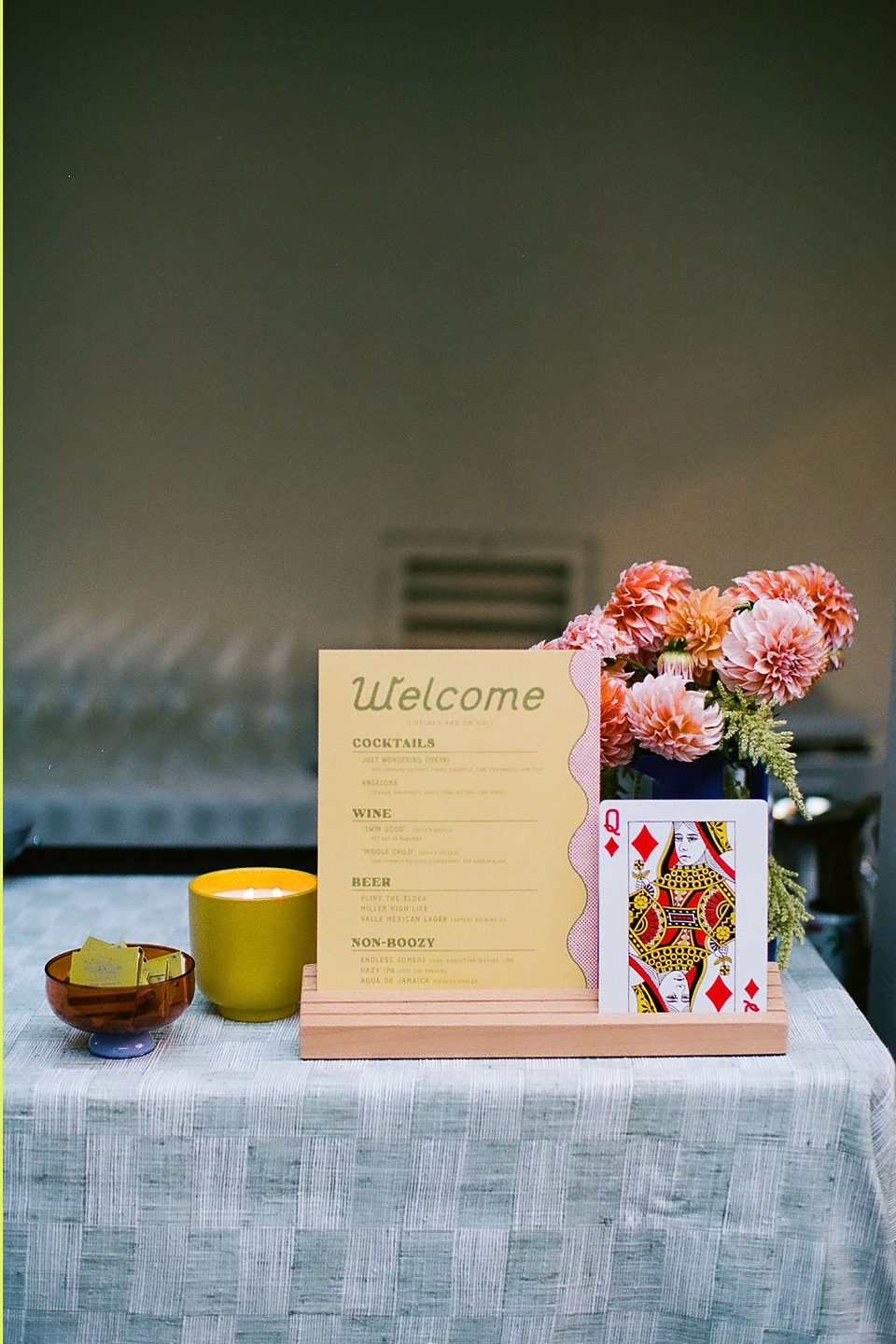
By swapping printed linens from Theoni between Friday and Saturday, the same structure took on a completely different feel for each event. The same approach was carried through to signage. We reused the same holders, and Kavamore Press created pieces that felt different but still cohesive across the weekend. The large-format playing card was a subtle preview of the table numbers for the wedding day.


6. Build in Time for Couple’s Photos
When you’re planning a wedding weekend, I always recommend adding hours with your photographer to capture the welcome party and setting aside time for golden hour photos.
This is a low pressure moment that helps you get comfortable in front of the camera. By the time the wedding day arrives, there’s less nervousness and everything feels more natural.


7. Be Intentional About Toasts
We split toasts across the weekend. Friends spoke at the welcome party, while family toasts were saved for the wedding day.
It helped balance the flow of both events and gave each group their own moment without overloading the timeline.

8. Choose Food That Feels Personal and Familiar
For the welcome party, we brought in Heritage Eats, the same caterer from the couple’s engagement party.
A taco bar with churros kept things fun and approachable while also adding a layer of personal history to the weekend.

Final Thoughts
The most seamless wedding weekends aren’t about doing more. They’re about being intentional with what you do choose.
A well-planned welcome party can take pressure off the wedding day, create meaningful moments early on, and set the tone for everything that follows. Wedding weekends have always been my favorite for this reason. They create space for real quality time - time to connect, settle in, and actually be present with your people.


Comments